
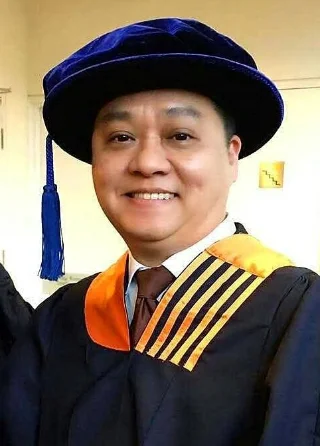
Dr Chiew Foong Kwong
Associate Professor, Head of Department
The container terminal is a key node in global trade and logistics, where trucks connect quay cranes, storage yards, and vessels. Optimizing truck scheduling is crucial for enhancing port efficiency by addressing issues such as low truck utilization, excessive quay crane waiting times, and extended equipment completion times. This paper develops a container terminal simulation model based on graph theory, with the objective of minimizing the maximum completion time of terminal equipment. A collaborative scheduling algorithm for truck fleets, based on Deep Double Q-Networks (DDQN), is proposed. The algorithm designs five heuristic rules as the action space and refines state features and reward functions to optimize scheduling effectively. Experimental results indicate that this algorithm consistently identifies optimal scheduling strategies, outperforming both the five heuristic rules and the Deep Q-Network (DQN) algorithm. It significantly reduces quay crane waiting times and equipment completion times, improves truck utilization, and enhances overall container terminal efficiency.